


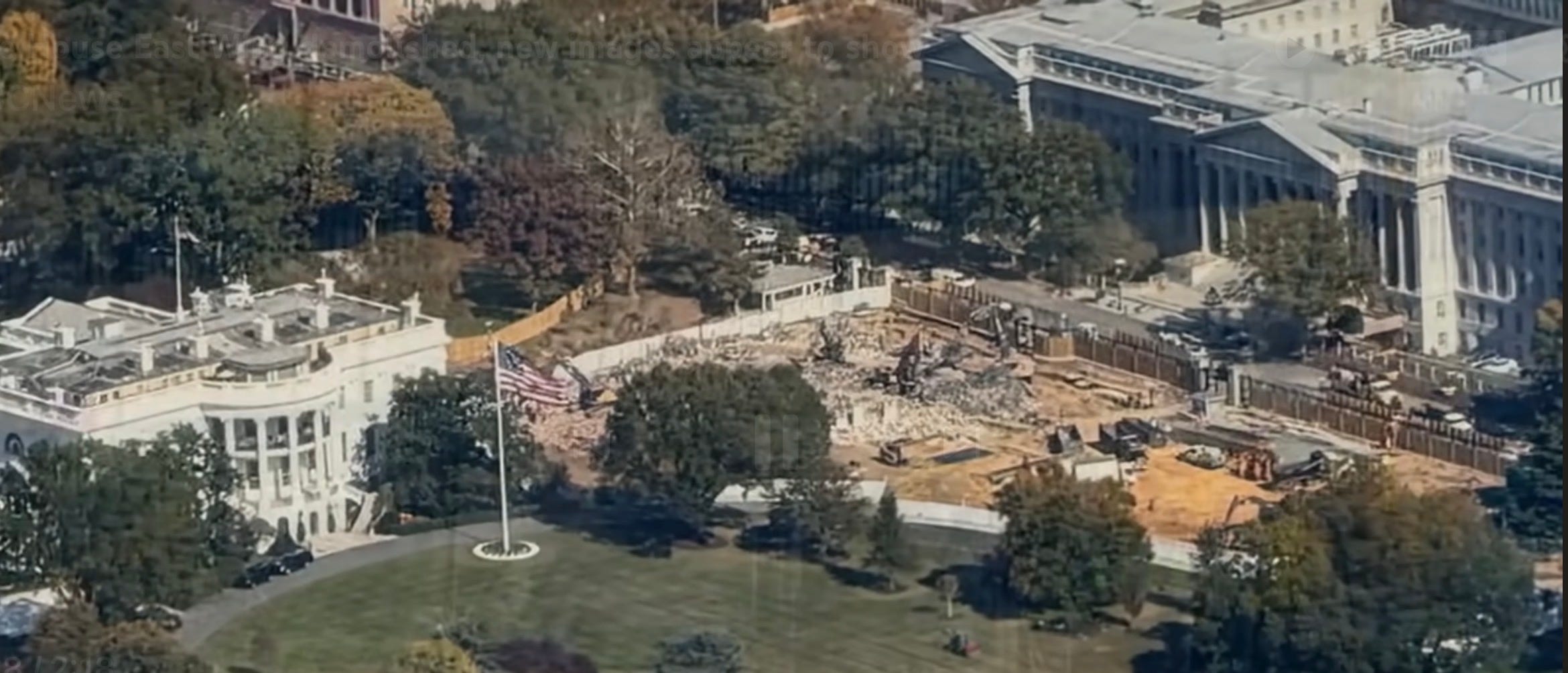
Donald Trump is not building a ballroom. He is building a fortress. He is also not merely pardoning the January 6 insurrectionists. He is creating a compensation system for them.
Those are not two separate stories. They are the same story.
This week, Trump toured reporters through his new White House ballroom project and described something far more ominous than a gilded reception hall for state dinners. Trump said the project would include an “impenetrable” steel roof, titanium fencing so strong “a bulldozer cannot knock it over,” four-inch-thick windows, a rooftop drone port “set up for unlimited numbers of drones,” and a six-story underground complex with a military hospital and research facilities. He continues to push relentlessly for roughly $1 billion tied to the project, even if the proposal has hit snags on Capitol Hill this week.
At the very same time, Trump’s Justice Department has created a $1.776 billion “Anti-Weaponization Fund” as part of a settlement of Trump’s lawsuit against the IRS. (1776. Get it?) The fund will hear claims from people who say they suffered “weaponization and lawfare,” with the final decision made exclusively by a Trump-appointed panel, whose members Trump will unilaterally be able to remove at will. January 6 defendants and Trump allies are already eyeing the money, including former Proud Boys leader Enrique Tarrio, who was sentenced to 22 years for seditious conspiracy before Trump pardoned him, and an attorney representing more than 400 January 6 defendants who plans to bring claims.
This is a payoff — and not just for services rendered.
Trump already issued sweeping clemency for January 6 defendants on his first day back in office, describing the prosecutions as a “grave national injustice.” Now his government has built a taxpayer-backed process that will allow the very people who stormed the Capitol, assaulted police, hunted lawmakers, and tried to stop the peaceful transfer of power to seek compensation from the public treasury. Acting Attorney General Todd Blanche refuses to bar even the people who assaulted police from seeking money from the fund.
Two officers who defended the Capitol, Harry Dunn and Daniel Hodges, have sued to block the fund, calling it unconstitutional and an illegal “slush fund” that would reward Capitol insurrectionists and increase the danger to officers who stood between the mob and Congress on January 6. The officers described it as the “most brazen act of presidential corruption this century.”
They are right. But it is even darker than that.