



Last week, we explored how the Kremlin used its cut-out, WikiLeaks, to launder stolen emails and bolster Donald Trump’s campaign. This week, we turn to Russia’s cyber-attack that made those leaks possible.
In 2016, Moscow’s hackers began carrying out cyberattacks that pushed their campaign of political sabotage into the very core of American democracy. They had already tested these methods in Ukraine — which served as a laboratory for Russia’s hybrid war playbook, from political capture and information warfare to cyberattacks and election interference — and had refined them further across Europe, targeting elections and referendums with growing sophistication. By 2015, Russia’s intelligence services had fixed their sights on the Democratic Party, probing its defenses and preparing the ground for intrusion. Their objective was clear: to prevent Hillary Clinton, long regarded by Putin as a formidable adversary, from ever setting foot in the White House. And now it was America’s turn. Russian intelligence moved from preparation to testing and finally to execution, breaking into the Democrats’ servers and unleashing a theft that would produce a vast cache of data and secrets and set the stage for an unprecedented leak-and-disinformation operation to shape and change the outcome of the 2016 election.
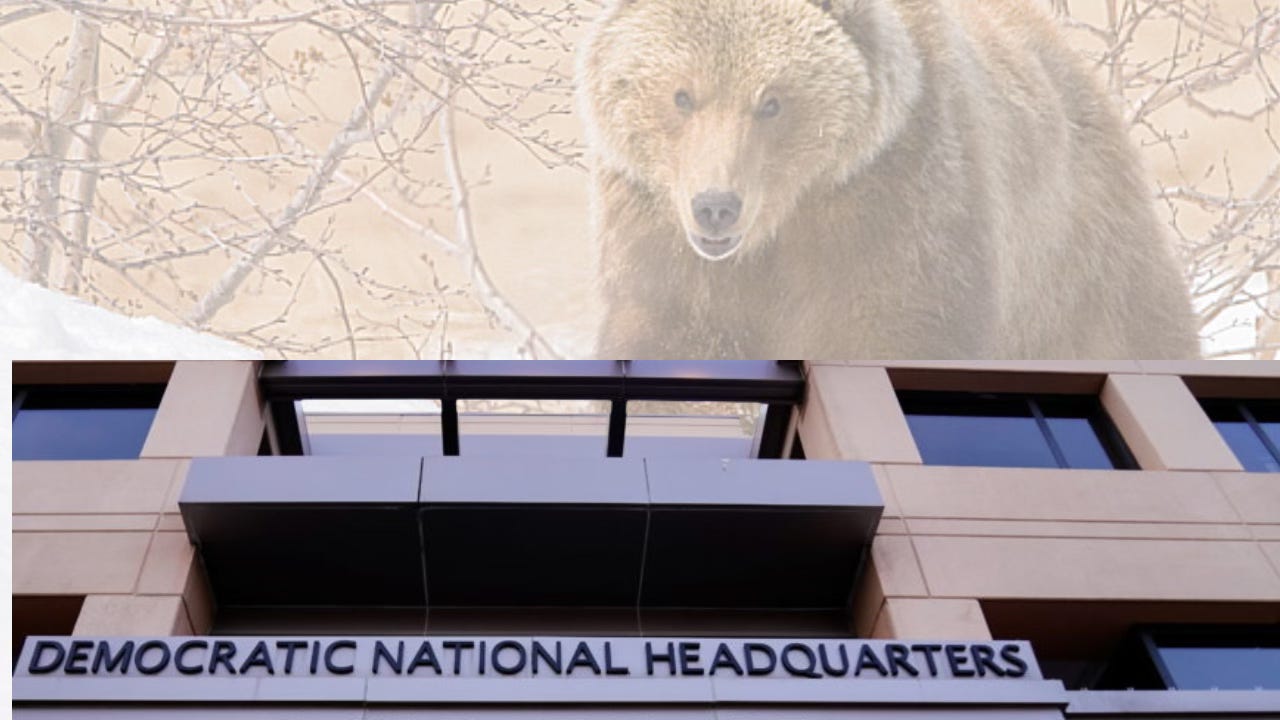
Shortly after Trump rode down his gilded escalator at Trump Tower to announce his presidential candidacy, and long before most Americans were paying attention to the presidential race, Russian intelligence operatives were already inside the Democrats’ networks. In July 2015, hackers tied to Russia’s Foreign Intelligence Service, or SVR, quietly infiltrated the Democratic National Committee. This unit, known as Cozy Bear, or APT29, specialized in long-term espionage — slipping into networks quietly, stealing intelligence methodically, and remaining undetected for months at a time. Cozy Bear had already been linked to earlier intrusions against the White House, the State Department, and foreign ministries across Europe.
The following spring, a second team from the GRU, Russia’s military intelligence, broke in as well. Known as Fancy Bear, or APT28, this unit was far more aggressive, operating with the mindset of an offensive strike force. Fancy Bear had already carried out disruptive operations in Europe, including the 2015 breach of Germany’s Bundestag and cyberattacks on French television. In Ukraine, between 2014 and 2016, the group seeded a legitimate Android app used by artillery forces with its X-Agent spyware, enabling Russian forces to track Ukrainian units in the field and gain a battlefield advantage.
By April 2016, both groups were dug into the DNC’s servers — Cozy Bear cataloguing intelligence with patience, Fancy Bear moving more brazenly, planting malware, and siphoning off data at will.
Cozy Bear’s hallmark was patience. Investigators concluded that Cozy Bear operated quietly – mapping systems, maintaining persistence, and collecting intelligence over many months, rather than immediately exfiltrating masses of data. That slow, careful approach is characteristic of espionage-style operators whose goals are information collection and long-term access rather than dramatic, attention-grabbing disruption.
On the other hand, Fancy Bear’s activity in spring 2016 was more aggressive and tactically visible: spear-phishing campaigns, credential harvesting, and the deployment of custom malware families and drop-tools that allowed quicker access and data staging for exfiltration. This group’s methods and targeting patterns—particularly toward political and defense-related email accounts—fit a profile of operators conducting targeted intrusions with a faster tempo, which in this case coincided with data exfiltration that ultimately surfaced publicly through personas such as “Guccifer 2.0” and through the Kremlin’s selected publication channel, WikiLeaks.
Fancy Bear’s methods were deceptively simple. In March 2016, GRU officers sent out spearphishing emails disguised as routine Google security alerts. One of those fraudulent messages reached Clinton campaign chairman John Podesta. With a single click, the hackers unlocked his entire Gmail archive. Other campaign staffers and volunteers fell into the same trap, handing over opposition research, strategy documents, and private communications. Similarly, GRU operatives broke into the Democratic Congressional Campaign Committee, which shared part of its network with the DNC. By late spring, they were moving through Democratic servers with ease, planting malware and pulling out thousands of files.
The breach finally came to light on April 28, 2016, when DNC staff spotted strange activity on their servers. In fact, the FBI had tried warning the DNC about suspicious activity months earlier, but the alerts never translated into action — a lapse later flagged as a serious counterintelligence failure. Now, with the compromise undeniable, the party called in CrowdStrike, a private cybersecurity firm, to investigate. By June, the intruders had been kicked out. But before vanishing, the hackers staged one last raid, siphoning off hundreds of gigabytes of data to GRU-controlled servers.
As former FBI Director James Comey later testified, the Bureau first warned the DNC about a suspected Russian intrusion in September 2015 and continued contacting a DNC IT contractor through early 2016. But the FBI never obtained direct access to the DNC’s physical servers; instead, once the DNC hired CrowdStrike in spring 2016, the FBI worked through the firm, receiving forensic images and indicators rather than imaging the machines itself. Comey alleged that the FBI had made “multiple requests” for access that were not granted. Part of the reason may have been political: in July, 2015, the Bureau had opened up an investigation into Hillary Clinton’s email server.
The DNC might have been suspicious that the massive counter-intelligence breach that Comey was now warning about was a predicate for the FBI to access its email servers in order to build the case against Clinton. Here, the Kremlin had succeeded beyond its wildest dreams. It had ginned up social media chatter about Clinton’s alleged criminality to such an extent that it had penetrated right-wing media and Republican talking points, forcing the FBI to open an investigation into her use of a private email server. That act, in turn, made Democrats deeply suspicious about Comey’s motives, denying the Bureau direct access to their servers and ensuring that the Russian hack could go on for months before the DNC did anything about it.
Stealing the data was only phase one; the core Kremlin operation was to weaponize it — to reshape, repackage, selectively leak, and in some cases fabricate or alter material before release, disseminating it into the mainstream of American politics as an instrument to influence the outcome of the 2016 election and tilt the scales toward Trump. To accomplish this, Moscow constructed layers of disguise, building cut-outs that could stand in for the Kremlin while concealing its fingerprints, false fronts designed not only to launder the origin of the leaks but to muddy the trail so thoroughly that when the documents finally surfaced, Russia would have the luxury of plausible deniability, insisting that it had nothing to do with carrying out a multi-faceted attack on the U.S. election to get Trump elected.
But for Moscow, the operation also had another purpose. The hackers who had tunneled deep into the Democrats’ servers were never meant to remain invisible operators in the shadows, content with espionage in the traditional sense. Their theft was only the opening phase of an operation designed to be weaponized — hacked material repurposed for influence operations and reintroduced into the public sphere under fabricated identities that simulated grassroots dissent and carried the mystique of rogue actors. In June 2016, one of those identities appeared in the form of DCLeaks, a website packaged as a collective of American hacktivists exposing corruption, but in reality conceived and directed by the GRU, its content scripted inside Russian military offices and its targets chosen with precision for maximum disruption.
Only days later, after CrowdStrike publicly identified Russia as the culprit, another persona emerged — “Guccifer 2.0.” Claiming to be a lone Romanian hacker, “Guccifer” insisted that he had personally broken into the DNC and produced stolen files as proof. In reality, the persona was a GRU officer operating under a false flag, communicating in broken English and hiding behind a fabricated identity.
Both DCLeaks and Guccifer 2.0 were fabrications engineered inside Russia’s psychological operations units (GRU units 26165 and 74455), designed to give the stolen material a veneer of authenticity while affording Moscow plausible deniability. From these fronts, the data began to flow outward — at times in carefully measured drips to handpicked reporters, and at other moments in wholesale transfers to WikiLeaks, which would time its releases for maximum impact depending on the electoral calendar.
In parallel, “Guccifer 2.0” carried out communications with U.S. figures and outlets: he exchanged direct messages with Trump confidant Roger Stone, fed material to Jared Kushner’s New York Observer, and passed stolen documents to a Florida GOP operative and a congressional candidate. As we noted last week, these contacts unfolded amid WikiLeaks’ rising role as the Kremlin’s preferred cut-out to disseminate the hacked material — and in the same broad window when Paul Manafort was alleged to have visited Julian Assange in London.
On July 22, three days before the Democratic National Convention, WikiLeaks dumped nearly 20,000 internal DNC emails into the public sphere. The release landed with precision timing, detonating on the eve of the Democrats’ showcase in Philadelphia. The fallout was immediate, with protesters filling the streets, furious Bernie Sanders supporters accused party officials of tilting the primary to Clinton, and DNC Chair Debbie Wasserman Schultz was forced to resign before she could gavel the convention to order. What should have been a week of unity turned into a spectacle of division, as television screens across America replayed images of chaos inside and outside the convention hall.
Trump and his allies seized on the leaks as proof that the system was “rigged,” weaving them into his campaign’s central narrative of betrayal and corruption. Cable news ran wall-to-wall coverage of the DNC’s internal fight, overshadowing Clinton’s effort to present herself as the steady alternative to Trump’s volatility. Moscow had delivered a propaganda victory: it had fractured the Democratic Party on the eve of its most important moment and fed Trump a narrative that would echo through the campaign trail.
But the biggest surprise was still to come. The Kremlin was holding back its most potent weapon, timed for maximum disruption in the final weeks of the race: the October surprise, courtesy of Moscow.
On October 7, 2016, only hours after the release of the Access Hollywood tape threatened to sink Trump’s campaign, WikiLeaks began publishing John Podesta’s emails. Day after day, thousands of messages were released, dominating headlines and drowning out Trump’s scandal. Though the emails contained no single devastating revelation, they provided endless material for Trump’s attacks and spawned conspiracy theories like “Pizzagate.” The timing was no coincidence: Russia had staged its October surprise to maximum effect. Trump himself embraced it eagerly, and in the final month of the campaign he mentioned WikiLeaks more than 160 times, telling rally crowds repeatedly, “I love WikiLeaks” and using the stolen material as a central theme of his closing argument.
That same day, U.S. intelligence officials publicly accused the Russian government of directing the hacks and leaks to interfere in the election. But their statement was lost in the noise of Trump’s scandal and the Podesta releases, which bookended the intelligence warnings on October 7. The Kremlin had manufactured so much informational chaos that even an extraordinary warning from American intelligence went under the radar. And Moscow’s efforts were not limited to cut-outs like WikiLeaks or fabricated personas like Guccifer.
If the goal was to create dissent in the Democratic base and suppress enthusiasm for Clinton’s candidacy among Sanders’ supporters, Russia could not have been more successful. One of the revelations in the Wikileaks Podesta data dump was the role that high-ranking officials had played to tilt the field for Clinton.
In March 2016, during the Democratic primaries, Donna Brazile was serving as a vice chair of the Democratic National Committee while also working as a CNN political commentator. At that time, Wasserman Schultz was still DNC chair. The Podesta revealed that Brazile had shared debate and town hall questions with Clinton’s campaign in advance, including one about the Flint water crisis before the CNN Democratic debate in Flint on March 6, 2016, and another on the death penalty ahead of a CNN/TV One town hall on March 13, 2016.
The leaks became public in October 2016, when WikiLeaks released the hacked Podesta emails. Initially, Brazile denied the allegations, but after Trump’s first inauguration, she admitted in an op-ed that she had shared the questions, calling it a mistake. By then, she had already stepped in as interim DNC chair after Wasserman Schultz resigned on the eve of the Democratic National Convention and had served in that role for the remainder of the 2016 campaign.
The episode left lasting damage, deepening mistrust between the Democratic Party’s establishment and its progressive base. Into this void stepped Kremlin tool Jill Stein, who attracted a sizeable number of Sanders supporters – enough to sway the election against Clinton in key swing states.
Meanwhile, investigators later found that the Kremlin’s hacking operations were not limited to the Democratic Party. Russian hackers did in fact breach some Republican targets in 2016, though not on the scale of the Democratic National Committee intrusions, and the material was never made public. Russian cyber actors collected limited data from Republicans and Republican organizations, including old domains of the Republican National Committee but not the current RNC network – perhaps to use as kampromat down the road but certainly not to leak publicly. In Congressional testimony, Comey confirmed that while there was evidence of intrusions into some Republican accounts, “there was not the same kind of release of material” that occurred with the Democrats. This asymmetry reinforced the assessment that Russia’s operations were designed to damage Clinton and boost Trump.
The Kremlin also did not hesitate to use Americans to do its dirty work. John Mark Dougan, a former Palm Beach County deputy sheriff, first gained notoriety under the online persona “BadVolf,” where he doxxed and published confidential Florida records. That campaign drew FBI scrutiny and a search of his home in March 2016.
Weeks later, Dougan donned a wig, drove through Canada, and fled to Moscow, where he received asylum. From Russia, he claimed to have helped create DCLeaks, but domain and hosting records contradict his account, and U.S. indictments and intelligence assessments attribute the operation to GRU officers, not to him. From Moscow, Dougan also pushed the Seth Rich conspiracy, one of the most corrosive conspiracies in modern political history, while boasting that he possessed Epstein-related material from his Palm Beach years. (Those claims remain unverified.)
It was after Russia’s full-scale invasion of Ukraine in 2022 that Dougan resurfaced as a key propaganda asset. Investigators tied him to more than 150 fake “local news” sites and AI-driven content farms, including outlets like DC Weekly and the Chicago Chronicle, which funneled Kremlin talking points into English-language media and laundered them into Western feeds. By 2024, Dougan had turned his attention squarely back to U.S. politics. Documents reviewed by European services and U.S. reporters linked his network to Russian intelligence facilitators — including contacts around GRU Unit 29155 and Moscow think-tank intermediaries — and traced his role in seeding deepfakes and fabricated stories, notably anti-Kamala Harris content. In effect, Dougan tested out Russia’s advanced AI operations, moving from the 2016 hack-and-leak playbook to an AI-amplified propaganda network aimed at shaping the 2024 election.
Russia’s cyberattacks during the 2016 election extended well beyond leaks and disinformation. GRU operatives probed election systems in more than twenty states, breaching voter databases in Illinois and Arizona and stealing hundreds of thousands of voter records. They also targeted election software vendors and county officials, testing vulnerabilities in the very machinery of American democracy.
In July 2018, the Mueller investigation led to the indictment of twelve GRU officers for their roles in the DNC, DCCC, and Clinton campaign hacks. The indictment detailed how Russian military units stole the data, laundered it through DCLeaks and Guccifer 2.0, and funneled it to WikiLeaks. It even traced Bitcoin payments used to rent servers and buy infrastructure. Mueller concluded that Russia’s active measures were “sweeping and systematic” and personally approved by Vladimir Putin. (The indictment specifically tied the operation to the GRU’s Unit 26165 and Unit 74455–Fancy Bear, or APT28; earlier probes had identified the quieter SVR-linked Cozy Bear, or APT29, as the first to infiltrate the DNC in 2015.)
The Kremlin’s hack proved devastatingly effective. It fractured the Democratic Party, fueled Trump’s message, and sowed distrust in America’s electoral process. It also set a precedent that in the digital age, a foreign power could reach into the heart of a democratic election, steal secrets, and weaponize them in real time. This was espionage fused with psychological warfare and a template that would be repeated in future elections around the world.
I want to say something. What you do is compelling. It’s great. And it’s wonderful journalism. You are so authentic. And when I see you on shows. You are always speaking truths and facts. You keep it up. Because you inspire so many people. We need journalists like you. Thank you for doing what you do.
Great documentation and filling in the story of our naive Democracy's caving... to cozy and fancy bears. So tragic, political... the big losers are We the People around the free-world.
One question: does this relate to the spring/summer 2016 CambridgeAnalytica (Steve Bannon) via Facebook operatives... tested with Brexit, hired on by Trump after his nomination.. ??
Thanks for your keen and amazing investigative exposes, Olga and Julie!!